RGB
84
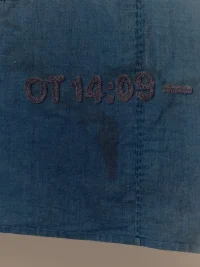
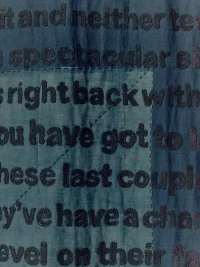
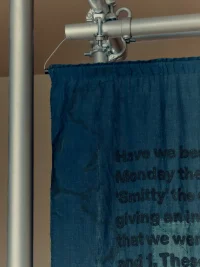
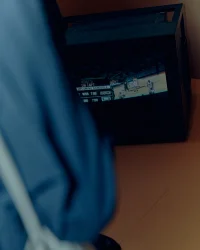
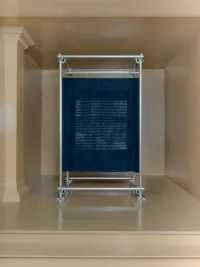
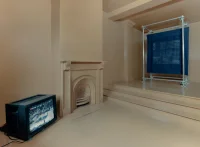
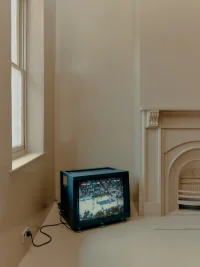
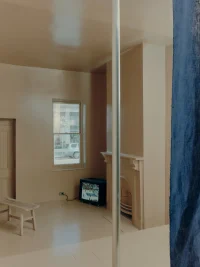
Chainstitch embroidery on indigo cotton furoshiki and single-channel video.
Exhibited at SAMU x Grau Projekt, 23 Oct – 14 December 2025.
Concept
Artwork
Installation
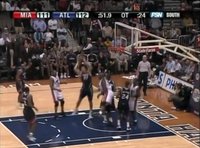
In December 2007, a regular NBA game between the Miami Heat and Atlanta Hawks turned into a fold in time. With less than a minute to play in overtime, Miami’s Shaquille O’Neal was ruled to have committed his sixth foul (the allowed limit) and was forced to leave the court. Atlanta went on to win the game.
Weeks later, Miami discovered the foul had been recorded against the wrong player. The foul was made by Udonis Haslem not Shaquille O’Neal. A clerical mistake had changed the course of the match, O’Neal (Miami’s key player) should have been able to play those final crucial moments. The team appealed, and in a highly unusual move, the NBA agreed. It ordered the final 51.9 seconds of the game be replayed. A ‘do-over’.
Three months later at the next meet between the teams, March 2008, play would be resumed from that exact point (score, time, and position) before continuing on to that days regularly scheduled game. The 51.9 seconds of replayed basketball seemingly didn’t alter anything, no-one scored, the season had almost wound up by then and much of the players from the first game had since been traded to other teams (including O’Neal). But, then again, sometimes the process is the purpose, even if on the surface it seems pointless.
RITUAL, TIME AND THE ART OF THE FOLD
The moment is always a contradiction. On one hand, every breath, every meticulously planned action, dissolves into the past, reinforcing the sheer futility of striving against the current of time. On the other, the impulse to repeat and reaffirm is the human engine of meaning. We are defined not by our outcomes, but by our rituals. The intentional, self-imposed geometries we trace on the blank canvas of existence.
Consider the act of meditation, the quintessential practical pointlessness. You sit in stillness, and the goal is not to achieve some cosmic breakthrough, but merely to return to the breath, again and again. The point is beside the point. The reward is not the destination, but the moment of awareness, the mind catching itself wandering and gently steering itself back. It is a victory that leaves no score on the board, the embodiment of winning without scoring. The action, the return, is not a means to an end, rather it is where process becomes purpose. Here, repetition is not stagnation, it is a declaration of presence.
This notion, that the method contains its own value, finds elegant expression in a tradition like furoshiki, the Japanese art of wrapping. A simple piece of fabric is used, unknotted, and reused, often for purposes wildly different from its last task. It is a lesson in repurposing not just objects, but energy. This is the medium as method—the fabric (medium) dictates a careful, intentional folding (method). It is an aesthetic juxtaposition too, soft, worn, Japanese indigo used to cover a gift embroidered with the chunky, high-saturation commentary of American sport. Or the serene, compartmentalised geometry of a Japanese manufactured screen contrasting with the kinetic chaos of an NBA game replayed in the mind. The collision is beautiful, intentional form applied to accidental life, a kind of ‘Pacific drift’ effect where matter is transposed and re-consumed in ways that alter the material itself.
IN CHASE OF MEANING
Our rituals used to float above tangible anchors. There is a nostalgia for a time that feels distant and yet immediate, where memory is tactile. Revisiting the 90s—00s, that shoulder era of luminous promise and technological revolution, we find relics that speak to this experience. Memory as a kind of furoshiki, wrapping and re-wrapping moments. Back then, the ritual was collecting basketball cards. Hundreds of dollars spent on cardboard squares, each attempting to freeze a future moment in time—a championship, a career peak. In the grand sweep of history, collecting these artefacts is an act of futility; what good are palm-sized, glossy squares now? But the cards, like the scent of a Sony Walkman or the tactile feel of an old Japanese-engineered gadget, are proof that the past lives with us. They were an attempt at folding time. By organising them, the collector manufactured meaning, imposing order on the future and claiming a sliver of immortality for these sporting heroes.
The ultimate ritual, however, demands not collection but removal. The practice of Zen teaches erasure, the stripping away of ego, attachment, and striving. It is the understanding that true solidity is found in emptiness, in nothingness. The futility that once loomed large, the feeling that all effort is wasted, is reframed. The effort isn't wasted, it is consumed by the present. Meaning is manufactured not by the thing we chase, but by the quiet, repetitive action of the chase itself. So, we persist; folding the fabric, brewing the tea, returning to the breath, replaying the game and organising the relics of our past. These small, intentional acts are how we make peace with the clock’s brutal indifference. The rituals don’t stop time. They transform it into a beautiful, reusable package.